
From Medical Imaging to Radiomics Role of Data Science for Advancing

Radiomics, the high-throughput mining of quantitative image features from standard-of-care medical imaging that enables data to be extracted and applied within clinical-decision support systems to improve diagnostic, prognostic, and predictive accuracy, is gaining importance in cancer research. Radiomic analysis exploits sophisticated image.
Advantages of Advanced Medical Imaging Services
Recurrences are frequent in nasopharyngeal carcinoma (NPC) despite high remission rates with treatment, leading to considerable morbidity. This study aimed to develop a prediction model for NPC survival by harnessing both pre- and post-treatment magnetic resonance imaging (MRI) radiomics in conjunction with clinical data, focusing on 3-year progression-free survival (PFS) as the primary.
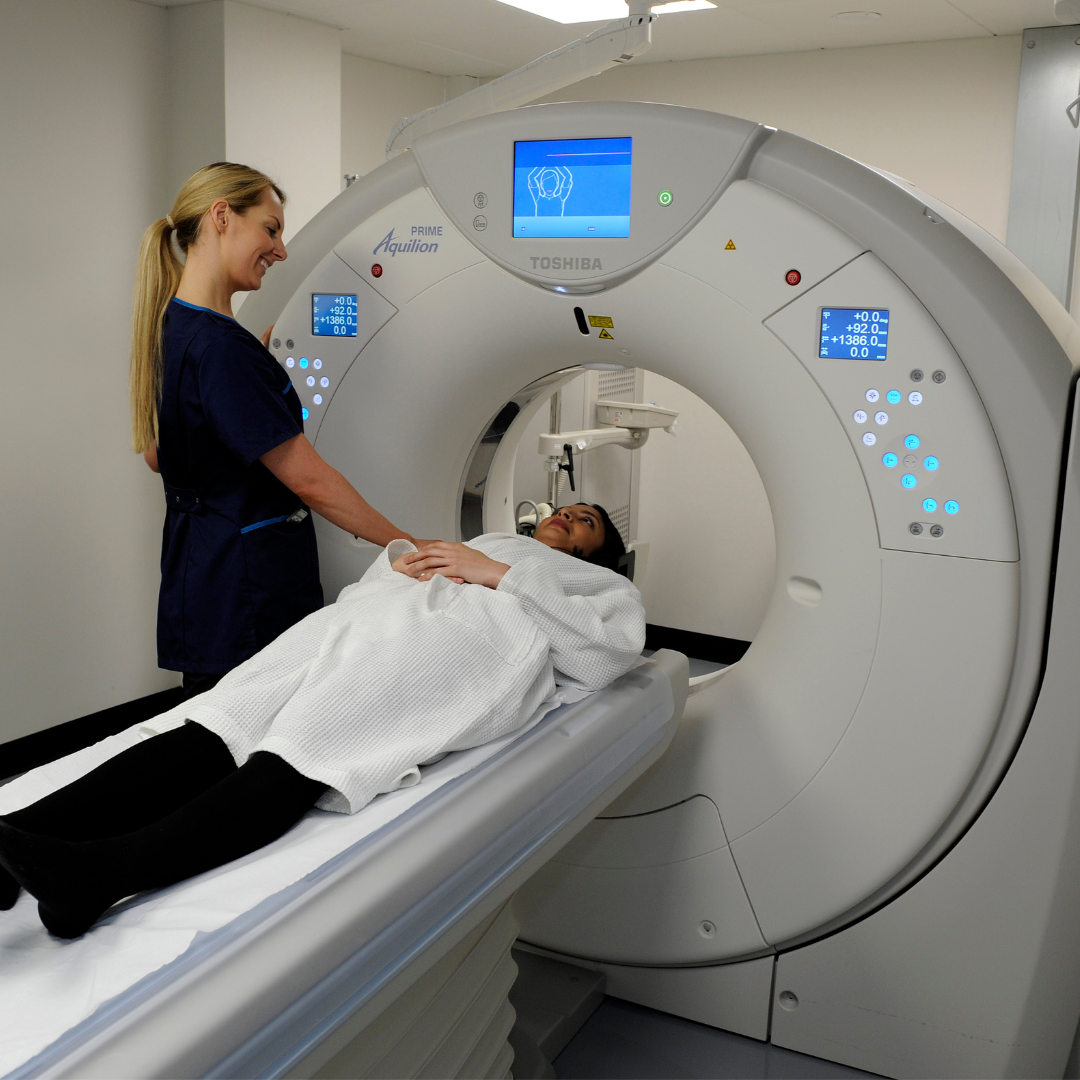
Medical Imaging & Diagnostic Scans Phoenix Hospital Group
The study described radiomics as a bridge between Medical Imaging and Personalized Medicine. It improved diagnostic, prognostic and predictive accuracy. Medical imaging creates an environment ideal for machine-learning and data-based science. The requirement of large data sharing made the study cumbersome.
Figure 5 Schematic overview of a clinical decisionsupport ppt download

This study employs radiomics analysis to assess image features in default mode network cerebral perfusion imaging among individuals with cognitive impairment. METHODS A radiomics analysis of cerebral perfusion imaging was conducted on 117 patients with cognitive impairment. They were divided into training and validation sets in a 7:3 ratio.
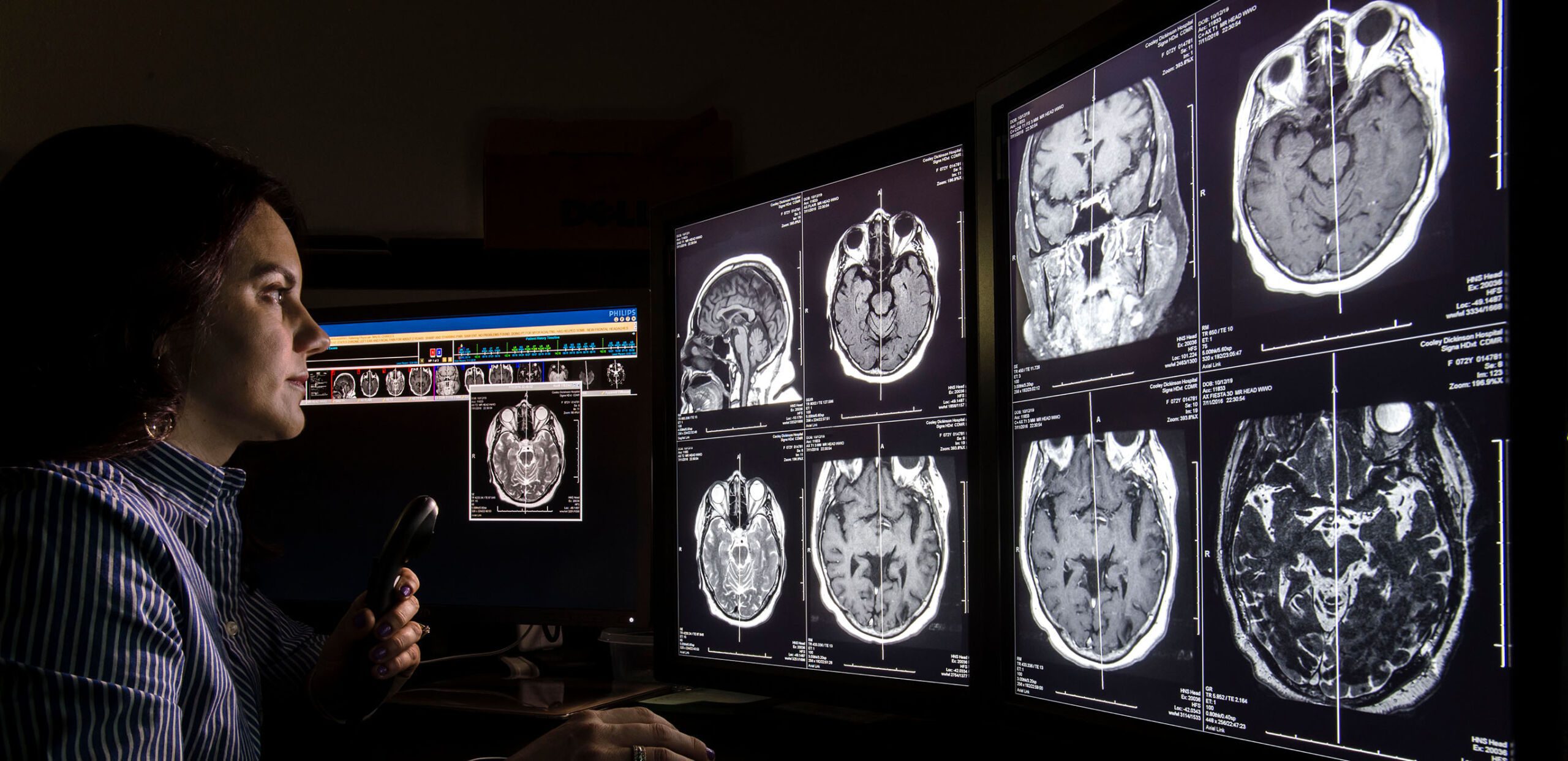
Radiology & Imaging Cooley Dickinson Health Care
Radiomics has evolved tremendously in the last decade, becoming a bridge between imaging and precision medicine. Radiomics exploits sophisticated image analysis tools coupled with statistical elaboration to extract the wealth of information hidden inside medical images, such as computed tomography (CT), magnetic resonance (MR), and/or Positron.
Deep learning reconstruction improves image quality for radiomics

Radiomics enables a more quantitative and detailed analysis of imaging data, potentially capturing subtle differences not discernible by human assessment. These distingishing features can be inputed into machine learning algorithms to build predictive models for detecting between radiation necrosis and tumor recurrence [12, 13]. The reliability.
Medical Imaging The Imperatives and Clinical Applications

PSMA-PET images were imported into the software using the Digital Imaging and Communications in Medicine (DICOM) protocol.. van Timmeren J, et al. Radiomics: the bridge between medical imaging and personalized medicine. Nat Rev Clin Oncol. 2017;14:749-62.. mutations in lung adenocarcinoma by noninvasive imaging using radiomics features.
Nuclear Medicine Imaging Kymera Independent Physicians

The artificial intelligence (AI) chatbot called ChatGPT is a powerful way for Black women to educate themselves about HIV prevention, as it provides reliable and culturally sensitive information.
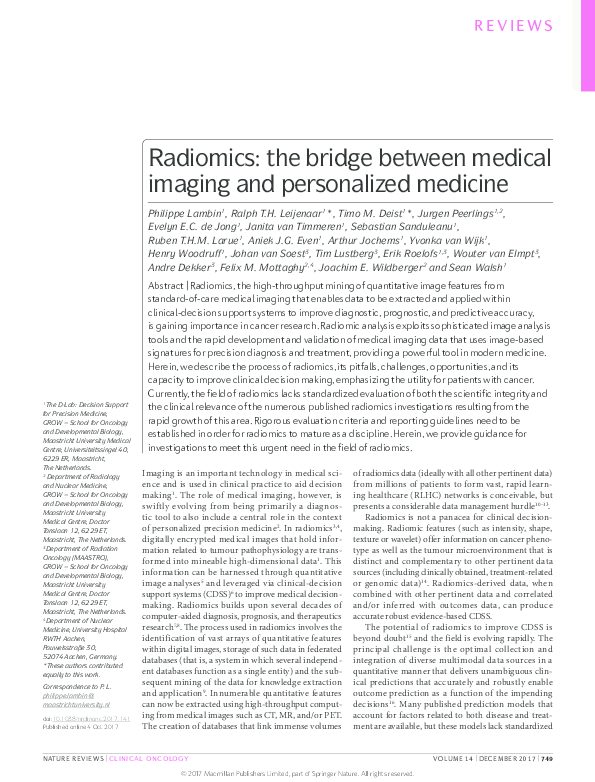
(PDF) Radiomics the bridge between medical imaging and personalized
Radiomics refers to the quantitative extraction of high-throughput features from medical images combined with their mining and analysis through machine learning algorithms.
Radiomics Sumer's Radiology Blog

Radiomics represent the extension of the omics concept into the realm of medical imaging to decipher vast amounts of quantitative data from clinical scans . Radiomic features, often imperceptible to the human eye, have demonstrated potential in predicting clinical outcomes in various conditions, including ICH [ 11 , 12 , 13 ].
Interventional Radiology in Arkansas CARTI Cancer Center
Radiomics, the high-throughput mining of quantitative image features from standard-of-care medical imaging that enables data to be extracted and applied within clinical-decision support systems to improve diagnostic, prognostic, and predictive accuracy, is gaining importance in cancer research. Radiomic analysis exploits sophisticated image.
Frontiers The Role of Radiomics in Lung Cancer From Screening to
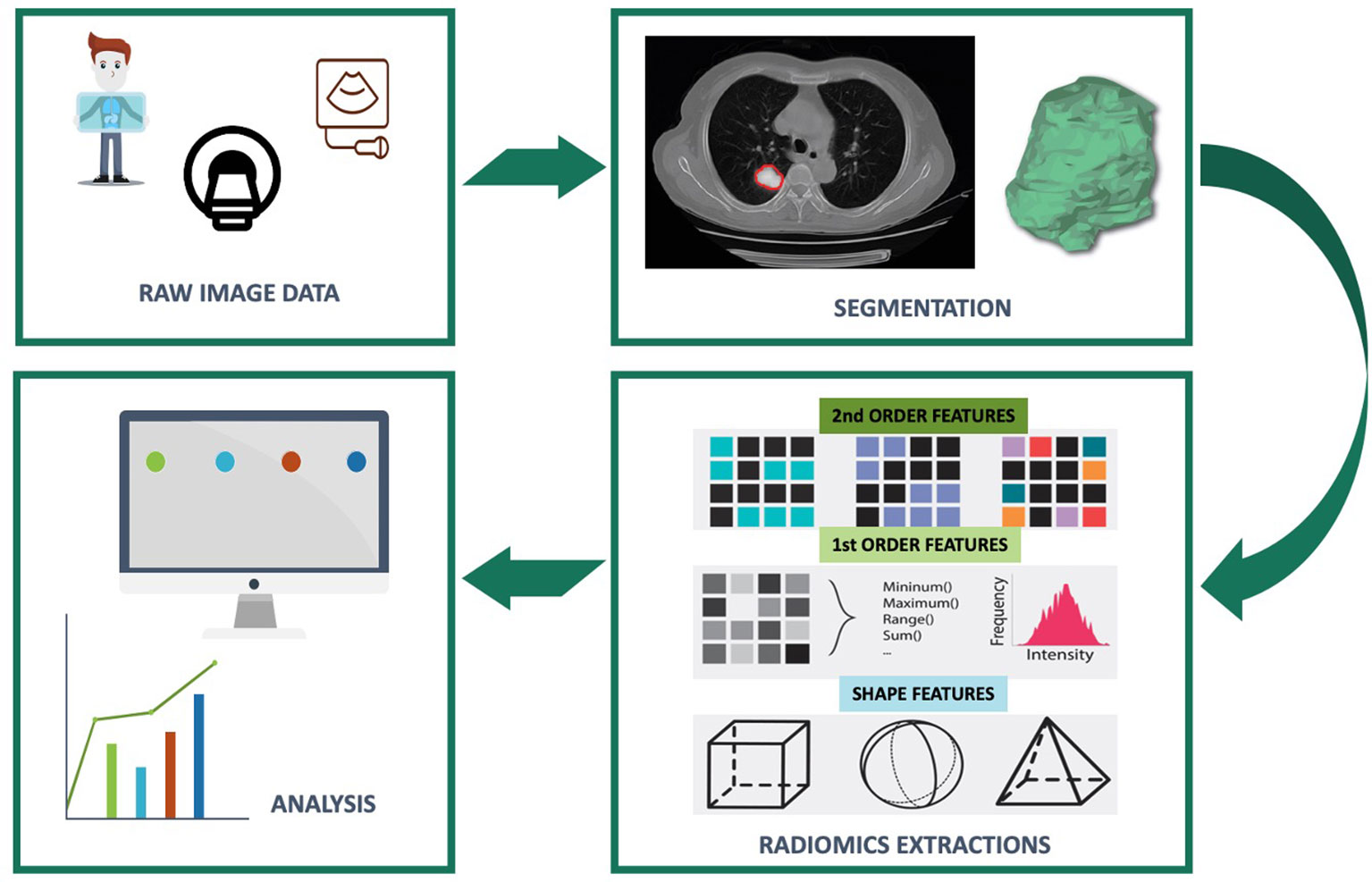
Expanding radiomics research to other cancer types and imaging modalities, as well as fostering multidisciplinary collaboration and data sharing, will be crucial for advancing the field. Such endeavors are pivotal for bridging the gap between radiomics research and its clinical application, ultimately leading to more effective and personalized.
(PDF) Radiomics the bridge between medical imaging and personalized

Radiomics, a rising field in medical imaging, has garnered considerable interest in oncology for predicting patient outcomes by extracting quantitative features from images and integrating them with genomic data [13, 14]. However, understanding the relationship between HNPGLs and radiomics is limited.
Precision Medicine and Personalized Treatment The Future of Healthcare
Background: A high incidence rate of nasopharyngeal carcinoma (NPC) has been observed in Southeast Asia compared to other parts of the world. Radiomics is a computational tool to predict outcomes and may be used as a prognostic biomarker for advanced NPC treated with concurrent chemoradiotherapy. Recently, radiomic analysis of the peripheral tumor microenvironment (TME), which is the region.
Frontiers Applications of Artificial Intelligence Based on Medical
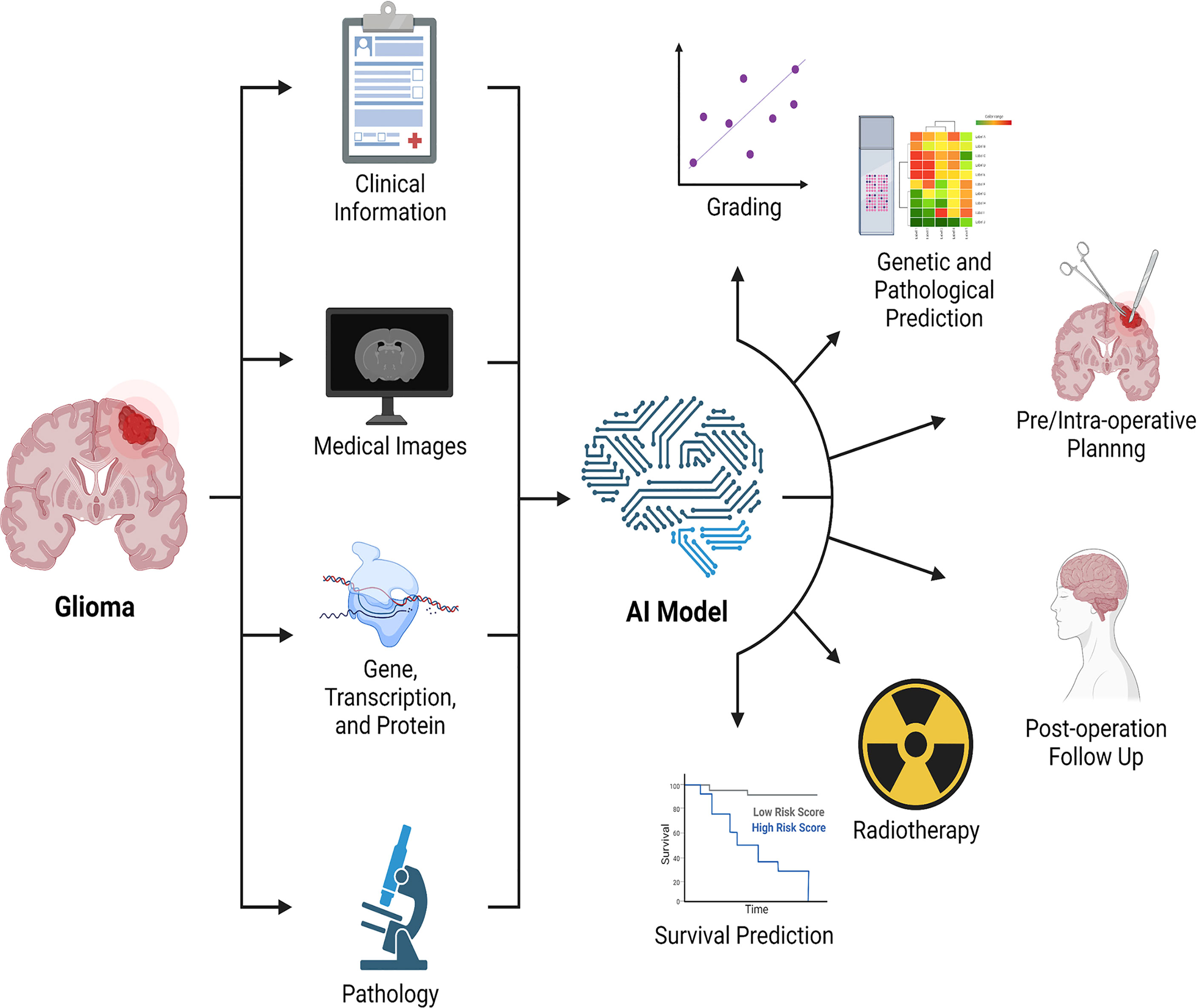
Radiomics is the high-throughput mining of quantitative image features from standard-of-care medical imaging to enable data to be extracted and applied within clinical-decision support systems.
Medical Imaging & Radiology
Purpose The aim of this study is to construct a combined model that integrates radiomics, clinical risk factors and machine learning algorithms to predict para-laryngeal lymph node metastasis in esophageal squamous cell carcinoma. Methods A retrospective study included 361 patients with esophageal squamous cell carcinoma from 2 centers. Radiomics features were extracted from the computed.
.